The Switzerland of America: Why Lake Placid Earns the Comparison
The comparison Nat Geo just made — and an owner’s take on it
In May 2026, National Geographic called Lake Placid “an upstate New York village that feels straight out of Switzerland” — with “the charm of a European alpine village” set against the Adirondack Mountains, no transatlantic flight required.
We’ve hosted travelers in our two historic Lake Placid cottages long enough to have an honest opinion on this kind of comparison. The lazy version — “America’s Switzerland!” — gets used about every mountain village in the country. The honest version, in Lake Placid’s case, holds up better than almost anywhere else in North America.
Here’s where the comparison actually works, where it doesn’t, and why even the doesn’t is interesting.
Five places where the Swiss-Alps comparison genuinely lives up
1. The lake-at-the-foot-of-the-mountains village pattern.
The defining Swiss alpine village layout is a small, walkable downtown clustered along a lake or river, with mountains stepping straight up out of the back of town. Interlaken, Brienz, St. Moritz, Gstaad — same template. Lake Placid does this exactly. Mirror Lake sits at the village’s center with its 2.7-mile walking loop; Main Street runs along it; the High Peaks step up behind. You can walk from one end of the village to the other in twenty minutes. There is no parking-lot suburbia between you and the mountains. That alpine-village pattern is the part of the comparison most US “mountain towns” don’t actually replicate.
2. The drive-or-tram-up-the-mountain summit experience.
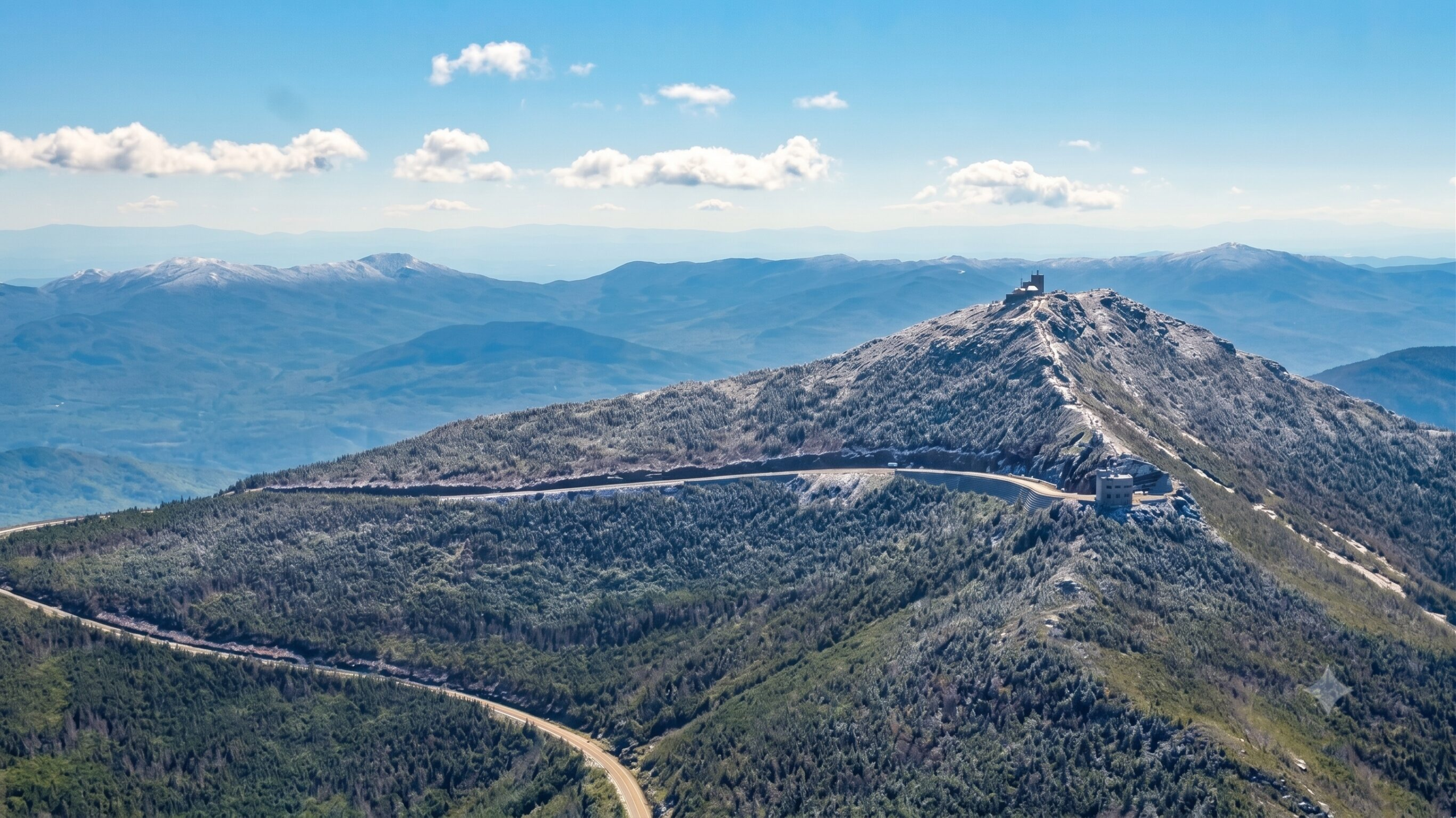
In the Swiss Alps the iconic move is: take a cog train, gondola, or mountain road to a summit you couldn’t reach on foot, eat at the top, and come back down. Lake Placid has the closest American equivalent: the Whiteface Veterans’ Memorial Highway, a five-mile toll road that switchbacks to within an elevator-ride of the 4,867-foot summit of Whiteface Mountain — the only fifth-highest peak in New York you can experience without a real hike. The summit has a stone castle, a café, and the elevator. Whiteface also has a gondola on the ski-area side. It is, very plainly, the most Swiss-feeling thing in the eastern United States.
3. The historic, deep-winter sports heritage.
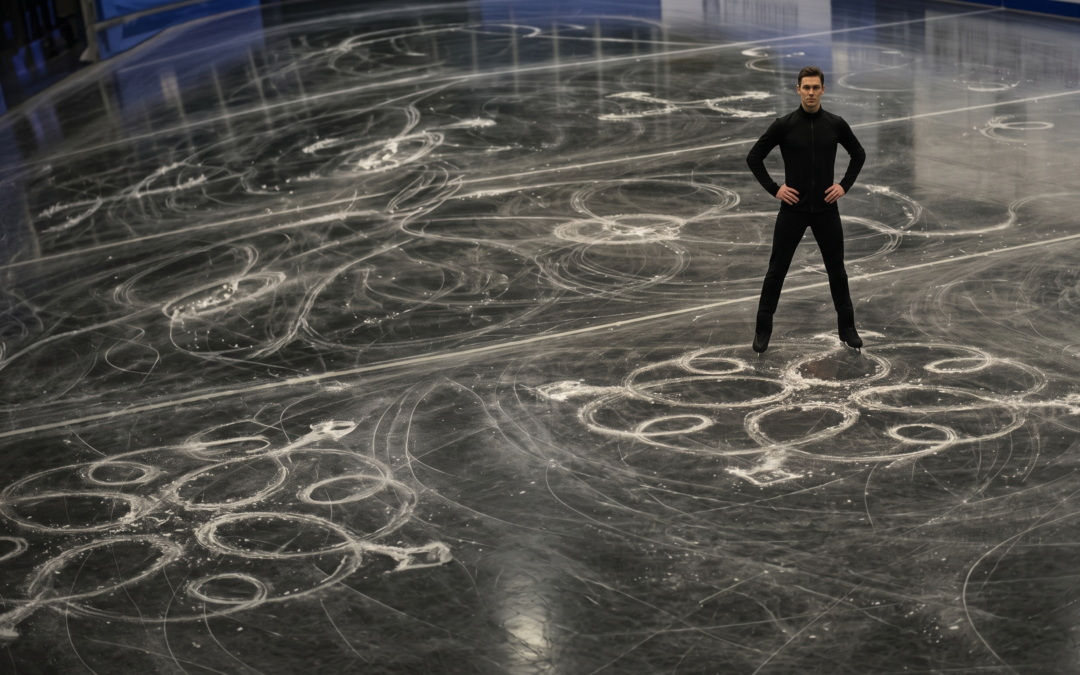
Swiss alpine villages are inseparable from their winter-sports identity — bobsled, ski jump, speed skating, alpine skiing, biathlon. Lake Placid is one of only three places on earth that has hosted the Winter Olympics twice — 1932 and 1980. (The other two are St. Moritz and Innsbruck — both alpine villages.) The Olympic infrastructure isn’t a museum piece either; the bobsled track at Mt. Van Hoevenberg, the ski jumps on Cascade Road, the speed skating oval, and the Herb Brooks Arena are all still in active use for training, competition, and public access. Most US mountain towns can claim ski culture; almost none can claim a complete Olympic-discipline footprint that’s operational.
4. The historic cottage / chalet building stock.
Lake Placid’s village core was built out during the late-1800s and early-1900s alpine-resort boom, when a generation of architects and builders were explicitly trying to evoke the European mountain-village character. The cottages that line the village streets — including the two we operate, Studio Cottage and Two Bedroom Cottage — are direct architectural descendants of that era. The Swiss-chalet aesthetic isn’t a marketing layer; it’s literally what was being built here a century ago, by people who had been to Switzerland and were modeling on what they saw.
5. The lakeside walking culture.
If you have ever walked the lakeside paths in Interlaken or Lucerne in summer twilight, the Mirror Lake loop in Lake Placid at the same hour will feel deeply familiar. Joggers, families, dogs, the occasional sailboat coming in, a thunderstorm rolling over the High Peaks. This is the underrated emotional content of an alpine village, and Lake Placid has it.
Two places where the comparison breaks — and why that’s actually interesting
1. The scale of the wilderness behind the village is bigger.
The Swiss Alps are spectacular, but they’re a relatively small geographic system woven through a heavily populated country. Adirondack Park is 6.2 million acres — bigger than Yellowstone, Yosemite, Glacier, Grand Canyon, and Great Smoky Mountains combined. A century before the words “national park” were used in modern conservation, the State of New York enshrined the Adirondacks as “forever wild” in its 1894 constitution. What that means in practice, for a traveler standing in Lake Placid’s village, is that the wilderness behind the cottages doesn’t end. It runs unbroken for hundreds of miles. There is no Swiss equivalent of that scale.
2. The public access is wider open.
Switzerland’s alpine experience runs on a refined paid infrastructure — cog trains, gondolas, mountain restaurants, premium trail huts. The Adirondacks run on the forever wild model: free public lands, no entry gates, no permit lottery for most trails, no quota systems on the High Peaks (with rare exceptions). You can step off Main Street and into the wilderness without an arrival ritual. This is more raw than the Swiss experience and, for some travelers, considerably more liberating.
The 1932 and 1980 Olympic Games proved the comparison long before Nat Geo
When the International Olympic Committee awarded the III Olympic Winter Games to Lake Placid in 1932, the village was the only place in North America with the alpine-sports infrastructure to host. The bobsled run was new; the ski jump was new; the speed-skating oval was new. Lake Placid won the bid because, as an alpine village, it was already producing the athletes and the infrastructure that made the Games possible.
In 1980 — when Lake Placid became the only village outside St. Moritz and Innsbruck to host the Winter Olympics twice — the Miracle on Ice happened on Main Street, in the same building that today contains the Lake Placid Olympic Museum and the Herb Brooks Arena, where public skating still runs most weeks on the original sheet of ice.
If you want the heritage piece — including which Olympic-themed movies to stream on a rainy night and where to find authentic merchandise — see our Miracle on Ice & rainy-day Lake Placid guide.
What a “Swiss Alps” Lake Placid trip actually looks like
If you were planning a week in Switzerland and wanted to translate it directly to Lake Placid, here’s the honest mapping:
- Walking Lake Geneva or Lake Brienz at sunset → walking the Mirror Lake loop at sunset.
- Driving the Furka Pass or Grimselpass → driving the Whiteface Veterans’ Memorial Highway (or our 10 scenic driving routes from Lake Placid).
- Riding a cog train to an alpine summit → taking the Whiteface elevator to the castle at 4,867 feet.
- A hut-to-hut day hike → the High Peaks day hikes from the Adirondack Loj trailhead (Cascade, Algonquin, Marcy). Be honest about your fitness; the High Peaks are real mountains.
- A leisurely bike-and-pastry day → the new 34-mile Adirondack Rail Trail, which starts a short walk from the cottages. See our Rail Trail guide.
- A village historic-cottage stay → a historic Lake Placid cottage. (We have two; see the cabin rentals guide for the full picture.)
- Swiss museum-and-chocolate afternoon → the Lake Placid Olympic Museum + Saranac Lake Adirondack Carousel + an ice cream stop at Donnelly’s on Route 86.
The travel math no one tells you
A Switzerland trip from the US East Coast typically runs:
- 8–9 hours of flight time (round trip each direction)
- $1,200–$2,500 in transatlantic airfare per person
- $300+/night for a comparable lakeside historic-cottage stay in the Berner Oberland
- Pay-as-you-go premium for cogs, gondolas, mountain restaurants
A Lake Placid trip from the US East Coast typically runs:
- About 5 hours drive from NYC, 4.5 from Boston, 2 from Albany or Montreal
- $0 in airfare
- One-third to one-half the per-night lodging cost
- Free public-land access; modest fees for ORDA venues (gondolas, museum, public skating)
You’re trading the cachet of being in Switzerland for a meaningful step-down in cost, friction, and carbon footprint — and gaining a wilderness scale that Switzerland physically doesn’t have. Whether that trade is right depends on whether you came for the experience or for the destination label. If it’s the experience, Lake Placid wins on practical terms by a wide margin.
Where to stay
The single thing that distinguishes a Swiss-feeling Lake Placid stay from a generic upstate-NY stay is location. The historic cottages in the village — walkable to Mirror Lake, Main Street, the Olympic Center, and Herb Brooks Arena — are the alpine-village experience. A rural cabin in the surrounding woods is a different, also-good trip, but it isn’t this one.
Our two cottages — Studio Cottage, Two Bedroom Cottage, or both together as the GO-Cottage Dual Cottage Retreat — sit in the historic village core. For the full breakdown of options (ours and others’), see our Lake Placid cabin rentals guide.
Check availability at GO-Cottage →
Frequently Asked Questions: Lake Placid and the Swiss-Alps Comparison
Why is Lake Placid called the Switzerland of America?
Lake Placid earns the comparison through a combination of features no other US mountain town packages together: a walkable village built around a lake at the foot of major mountains, a driveable/tram-accessible summit at Whiteface, a complete Olympic-sports infrastructure still in active use, historic early-1900s cottage and chalet architecture explicitly modeled on European alpine design, and proximity to the 6.2-million-acre Adirondack Park. National Geographic compared it directly to a “European alpine village” in May 2026.
Is Lake Placid actually similar to Switzerland?
In the structurally meaningful ways — yes. The village layout, the lakeside walking culture, the historic alpine-resort architecture, and the deep winter-sports heritage are direct parallels. The wilderness behind Lake Placid is far larger than Switzerland’s; the public access is wider open; the cost is significantly lower. Switzerland has more vertical drama and refined alpine infrastructure (cog trains, mountain restaurants, premium huts). Both are real and both are worth doing.
Has Lake Placid hosted the Winter Olympics?
Yes — twice. The III Olympic Winter Games in 1932 and the XIII Olympic Winter Games in 1980. Lake Placid is one of only three places in the world to host the Winter Olympics more than once. The other two are St. Moritz and Innsbruck — both Alpine villages. The 1980 Games included the “Miracle on Ice” U.S. vs. USSR hockey game on February 22.
What’s the closest thing to a Swiss alpine cog train in Lake Placid?
The Whiteface Veterans’ Memorial Highway and summit elevator. A five-mile toll road from Wilmington switchbacks up Whiteface Mountain to a stone castle, café, and elevator that takes you to within easy walking of the 4,867-foot summit. The view rivals the Swiss summit experience and is accessible to almost any fitness level. Whiteface also has a gondola on the ski-area side.
How big is Adirondack Park compared to other US national parks?
Adirondack Park is 6.2 million acres — bigger than Yellowstone, Yosemite, Glacier, Grand Canyon, and Great Smoky Mountains combined. It was designated “forever wild” in the 1894 New York State Constitution, predating most national parks. Unlike a typical national park, it’s a public-private patchwork with villages (like Lake Placid) inside the boundary.
How long does it take to drive to Lake Placid from New York City?
About five hours from Manhattan to Lake Placid village, depending on traffic. Compared with a 7–9 hour flight to Zurich plus ground transit to a Swiss alpine village, Lake Placid is the dramatically lower-friction alpine-village option for East Coast US travelers.